
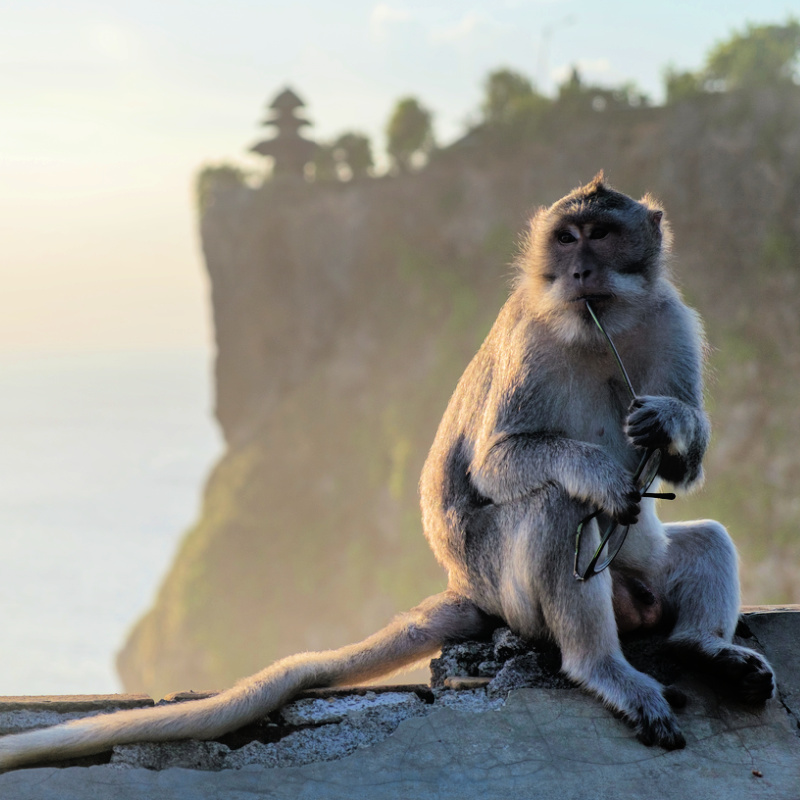
You’ve no doubt heard about monkeys in Bali; the famous monkey forest, the temples, maybe even seen them in documentaries on TV, causing mischief and stealing tourists’ belongings.
Uluwatu in particular is famous for these monkeys, especially in Uluwatu Temple.
But how many are there really? Are they a problem? And is it something you need to be concerned about?
In this guide, we’re taking a look at the monkey situation in Uluwatu, what they’re like, and what to expect when you come face to face with them.
TL;DR, Summary Of Monkeys In Uluwatu
- The monkeys in Uluwatu are long-tailed macaques who’ve become used to being around people.
- They’re not usually dangerous, but they are cheeky and known for stealing belongings.
- Most trouble happens when people get too close or try to interact with them.
- Don’t worry! Just keep your distance, hold onto your stuff, and you’ll be fine.
What Breed Are These Mischievous Monkeys?
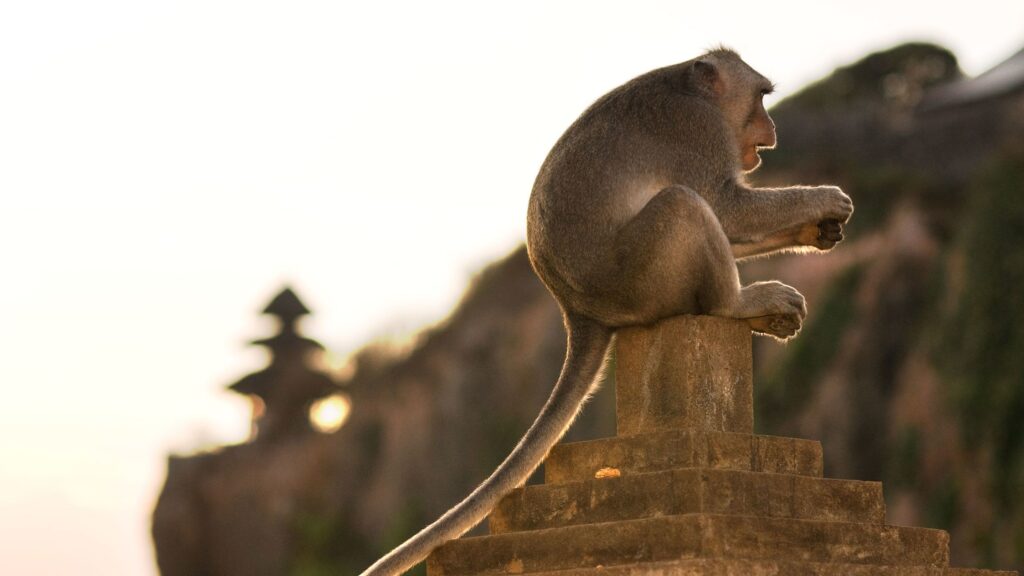
The monkeys you’ll see around Uluwatu are long-tailed macaques, a species of primate found across Bali and much of Southeast Asia.
They’re known for being highly adaptable, which is why you’ll find them in a range of environments, from forests to temple grounds, living comfortably alongside humans.
They also tend to live in groups, with a clear social structure, which is why you’ll often see several of them together rather than on their own.
Why Are There So Many Monkeys In The Uluwatu Area?
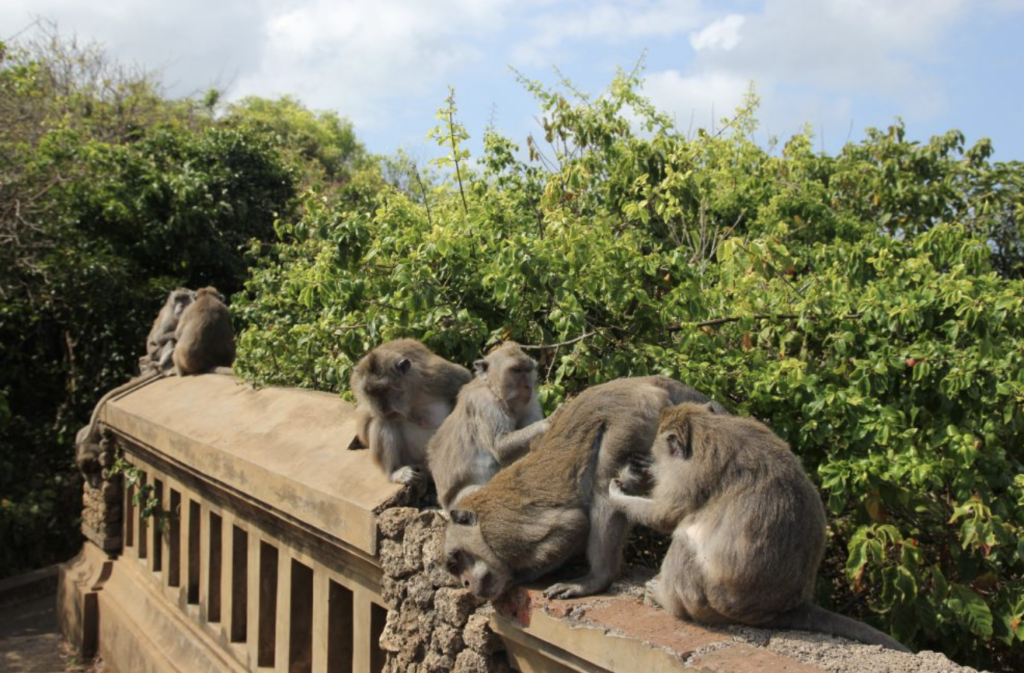
There are so many monkeys in the Uluwatu area because it offers the right mix of habitat, food, and protection.
The cliffs and surrounding forest give them a natural place to live, while the temple grounds have long been a safe space where they’re not disturbed. Over time, they’ve become used to humans being around, which has allowed the population to grow in this part of the island.
With a steady food source and few real threats, it’s an environment where they’ve been able to thrive.
Uluwatu Temple: The Cheeky Monkeys’ Favourite Hangout

On the Bukit Peninsula, this is where you’re most likely to come across the monkeys.
Around Uluwatu Temple, they’re everywhere. Sitting along the paths, perched on walls, hanging around the edges of the cliffs, watching people come and go.
They’re completely used to visitors, which is why they’re so bold. You’ll see them getting close, moving through the temple grounds, and keeping an eye out for anything they can grab.


To the locals, the monkeys are part of everyday life. They live in harmony with the temple and worshippers, and are even believed by some to be guardians of the temple.
They’re not aggressive most of the time, but they know exactly what they’re doing. If you’ve got something loose in your hand, there’s a fair chance one of them will try their luck.
Are The Monkeys Dangerous?
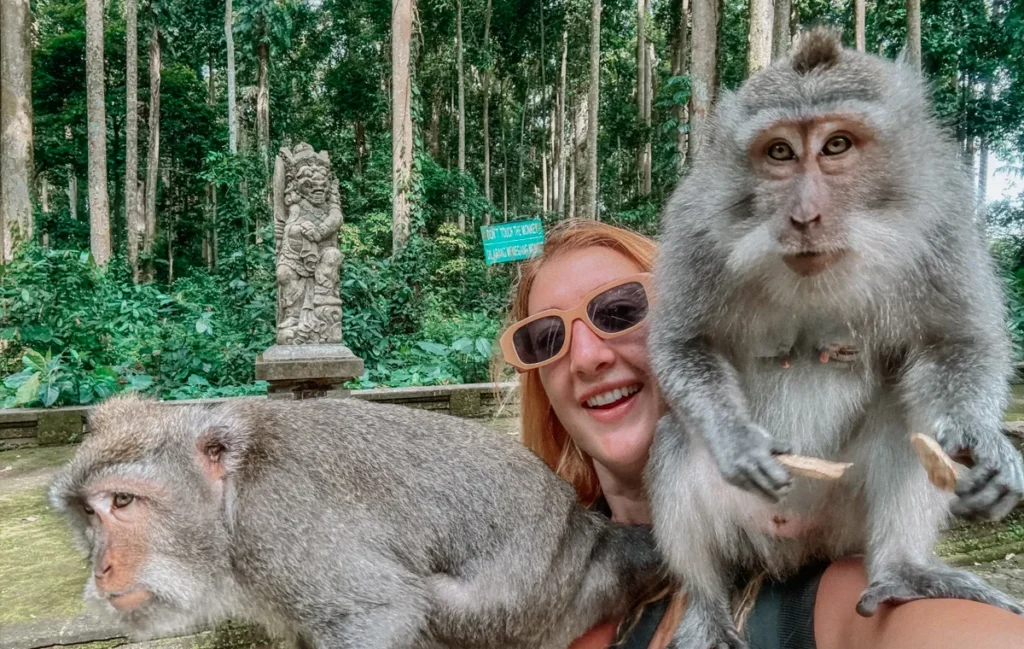
For the most part, no, not really. The monkeys are not out looking to hurt anyone; they’re very used to human beings, and the overwhelming majority of encounters are harmless.
Can they be dangerous? Potentially, yes, they can. They are, after all, wild animals, even if they hang around certain spots like they own the place. If they feel threatened, or even if someone tries to interact with them too hard, they can become aggressive.
Usually, issues arise when people get too close, try to touch them, or panic. Needless to say, there is no need to be afraid of them; just treat them with respect, keep an eye on them, avoid physical and direct eye contact, and remember, they were there first!
Monkeys And Your Belongings!
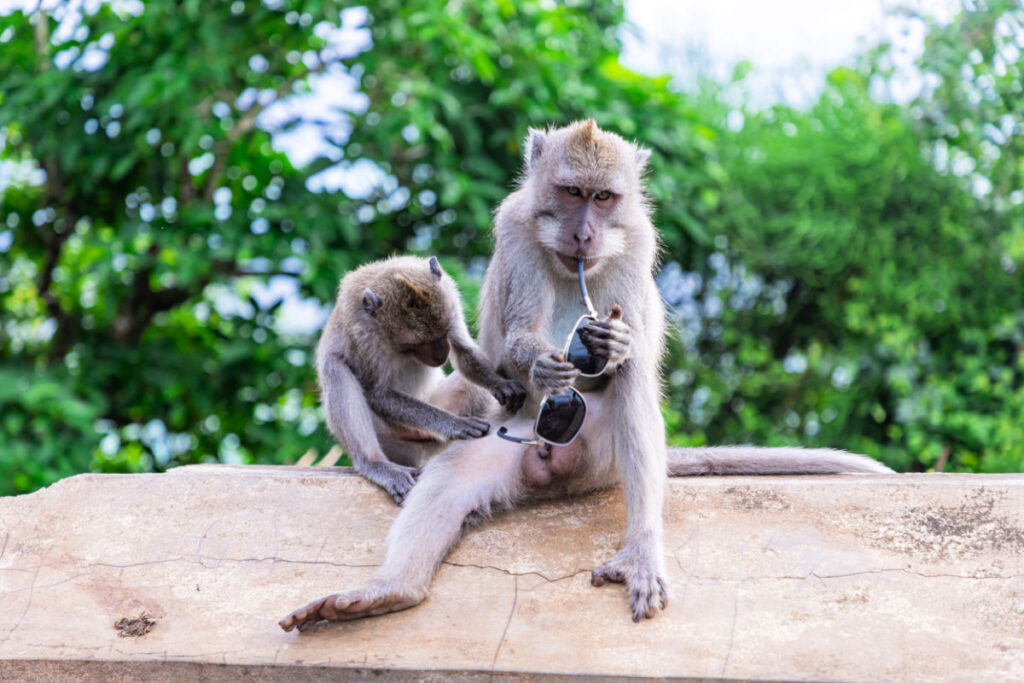
While not usually dangerous, the monkeys are naughty and smart. There’s one thing in particular they have their eyes on as soon as you walk through the door….your belongings.
Sunglasses are the main target, but they’ll also go for hats, bags, and even water bottles if they think there’s something worth having. If it’s loose, visible, or easy to grab, it’s fair game.
They’re quick as well. One second you’ve got something in your hand, the next it’s gone. You might not even realise what’s happened until you see one of them sitting nearby with it.
What To Do If A Monkey Steals Your Belongings
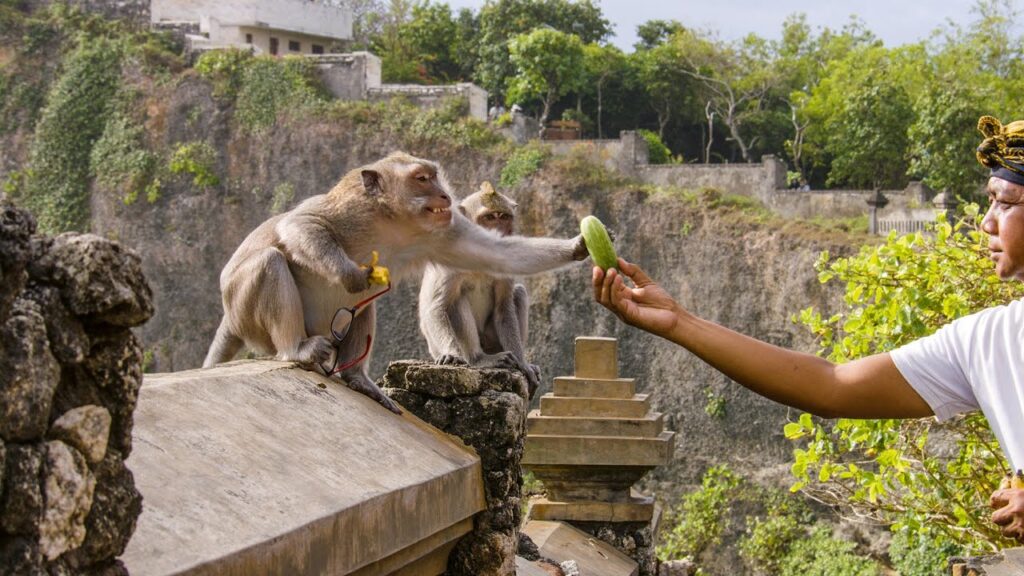
The monkeys are, as mentioned, not only naughty but smart. It might look like they’re stealing things for fun, but in reality, it’s more of a robbing and bartering system, almost like a ransom.
They’ll grab something like sunglasses or your phone, then hang around nearby, knowing there’s a good chance they’ll get something in return. The temple staff and local guides are well versed at this and will step in and help, offering food or even a drink to get the item back. They’ve done it plenty of times and know how to handle it.
If it happens to you, stay calm and don’t try to deal with it yourself straight away. You could try to offer something to the monkeys, but it’s better to get the attention of someone working there and let them handle it.
What you don’t want to do is chase, grab, or try to fight the monkey for it. That’s when things can turn nasty, and it’s not worth risking a fight over a pair of glasses.
What To Do If Scratched Or Bitten By A Monkey
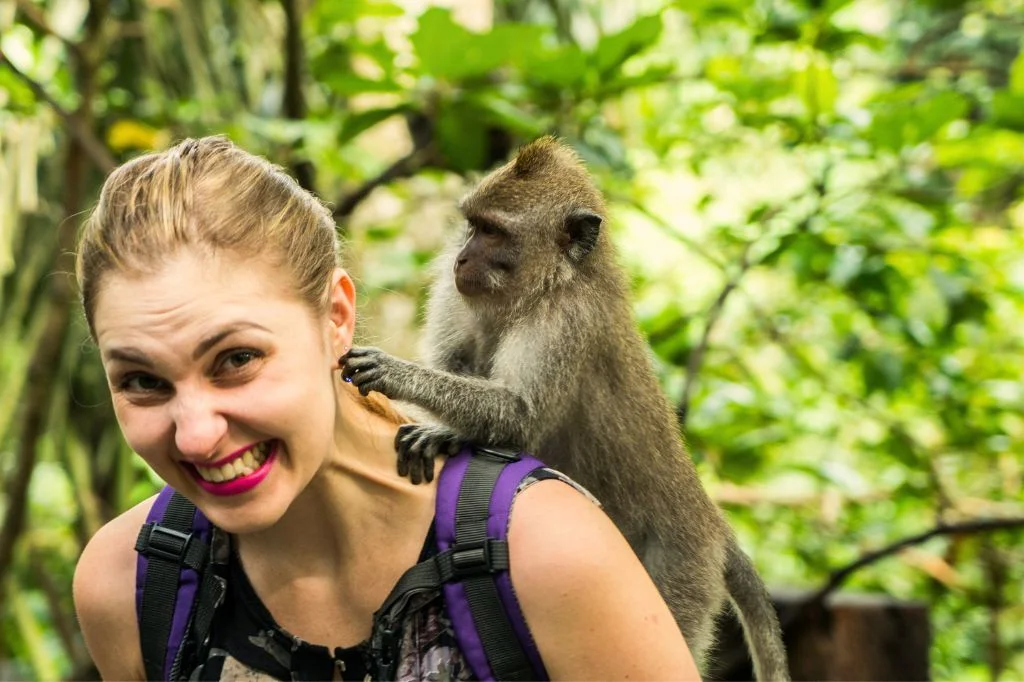
A bite isn’t just a little nip you can ignore. It can hurt a lot, it can bleed, and there’s always a risk of infection or disease.
First thing, put some distance between you and the monkey. If it’s still being aggressive, don’t try to fight it off or grab your stuff back; just move away calmly and give it space.
As soon as you can, wash the wound properly with soap and water. Don’t mess around with it, even if it looks minor; you’ll still need to get it checked at a hospital or clinic. We’ll get into why in the next section.
Understanding The Risks (e.g., rabies, infection)
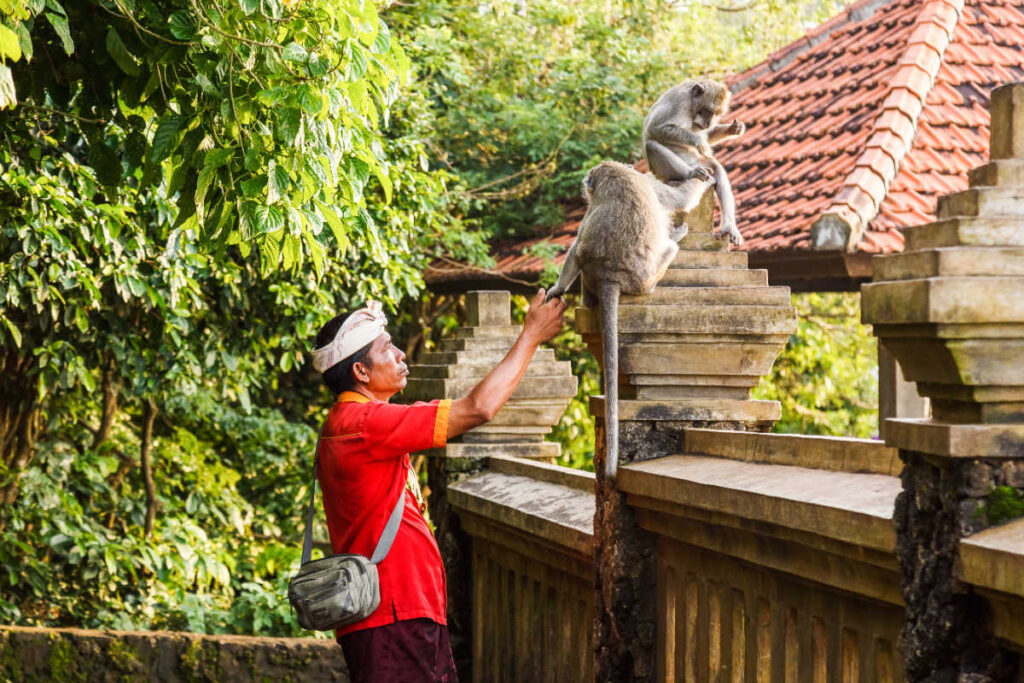
There are a few things you can pick up from a monkey bite or even a scratch. The big one, of course, is rabies, and that’s the one you don’t take chances with. Even if the wound doesn’t bleed, there’s still a risk.
Even if you’ve had a rabies vaccine before, you still need to get to a hospital as soon as possible. They’ll start a course of rabies injections and usually give you a tetanus shot as well. If you start feeling sick in the days following your bite, get back to the hospital immediately; your health and well-being are important.
Rabies itself is uncommon, but if it’s left untreated, it’s almost always fatal.
At Uluwatu Temple, rabies management protocols have been put in place with help from the Faculty of Veterinary Medicine at Udayana University, to help make it a safe place for locals and visitors. Islandwide, though, cases do still happen, and there were at least 12 deaths reported in 2025.
Read more about rabies in Bali in this article by FINNS Beach Club.
The Lowdown On Uluwatu’s Monkeys
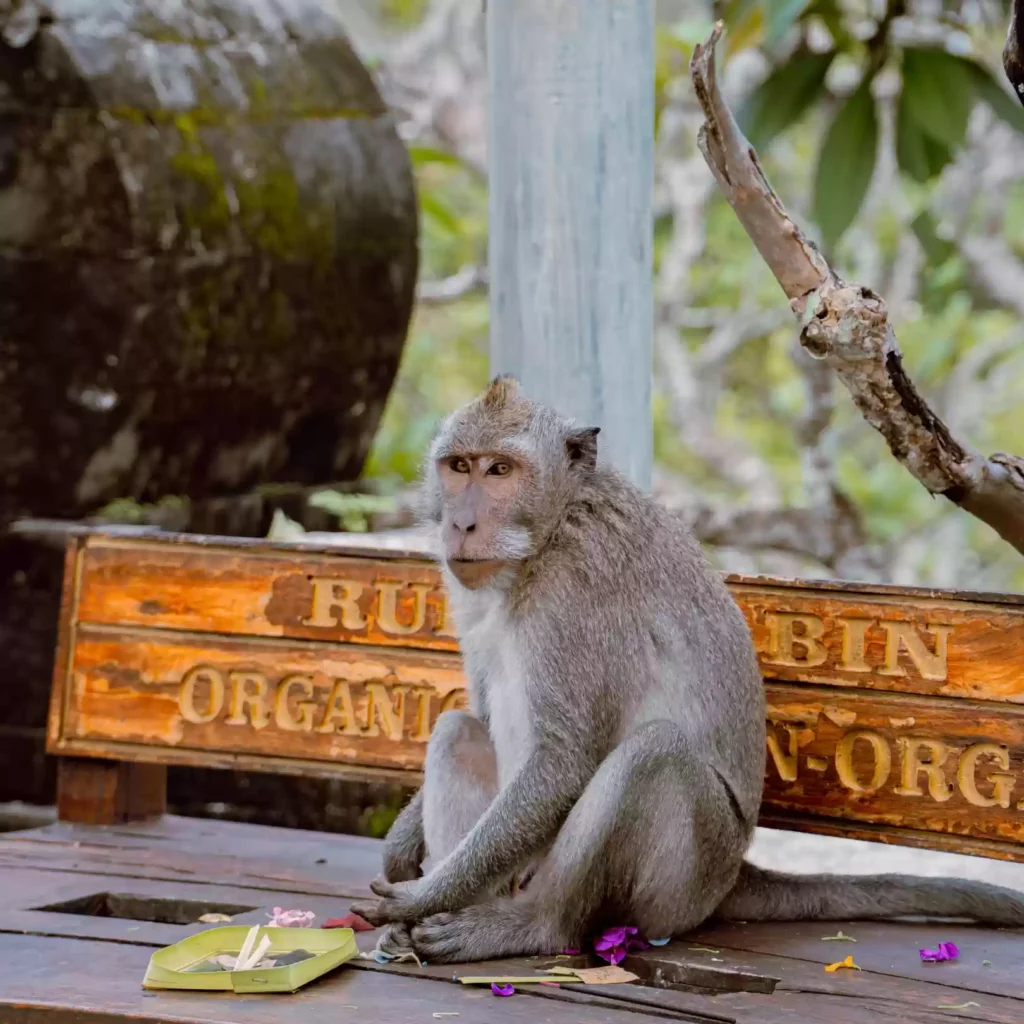
Uluwatu’s monkeys get a bit of a bad reputation at times, but the reality is they’re not much of a danger; they’re more of a nuisance if anything, and half the time they’re actually pretty cute and funny to observe.
You’ll see them sitting around in groups, almost like their own little community, grooming each other, looking after babies, chasing about, or just perched up in the sun watching everything going on. They’re playful, curious, and constantly aware of their surroundings.
They do have big teeth, and they can show them off now and again, but luckily for us, most of their aggression is aimed at each other. It’s all part of their behaviour and group hierarchy, and it’s pretty normal to see the odd scuffle or one getting chased off.
As long as you don’t try to interact, feed them, or get in their space, you’re very unlikely to get attacked. Respect them for what they are, wild animals that just happen to live in one of Bali’s busiest spots.
Really, they add to the whole scene, and it wouldn’t quite be the same place without them.
Other Popular Spots For Monkeys In Bali:
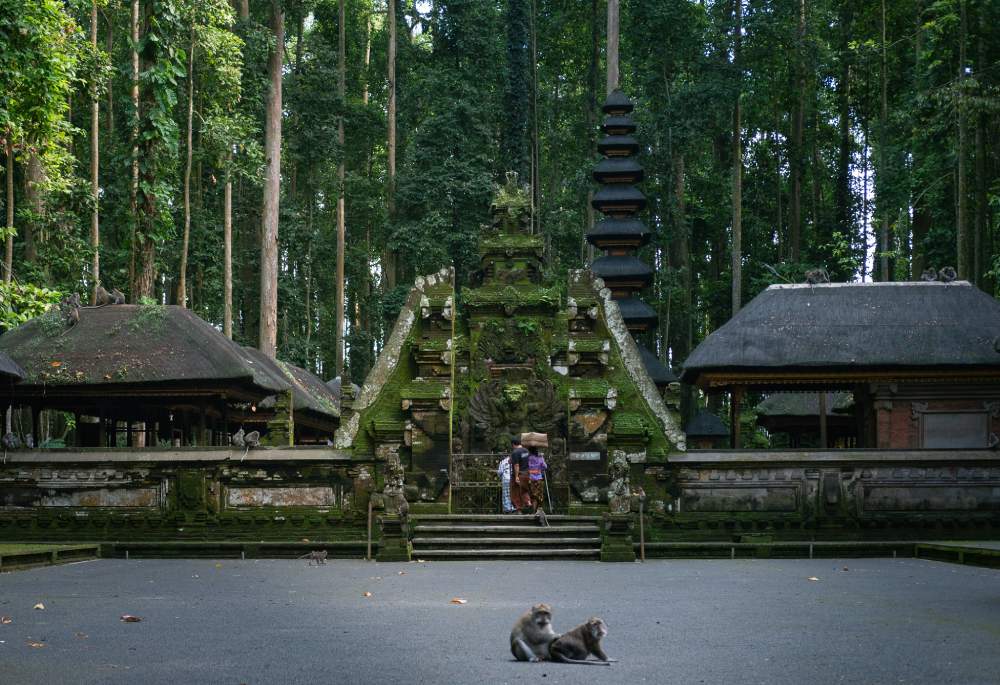
Monkeys aren’t just about Uluwatu Temple; in fact, they can be found all over the island.
- Ubud Monkey Forest – The most famous monkey spot on the island. Monkey Forest in Ubud is more set up than Uluwatu Temple, which is the main attraction of the place. There are proper pathways set up, and staff all over the place. The monkeys can still be cheeky here, though, and you need to be just as vigilant with your belongings.
- Sangeh Monkey Forest – A bit quieter and less chaotic than Ubud. The setting feels more relaxed, with tall nutmeg trees and fewer crowds. The monkeys here are generally calmer, but you still need to keep your distance and stay aware.
- Alas Kedaton – Smaller and a bit more low-key. You’ll find monkeys here, along with a temple and even some bats hanging around. It’s not as busy, but the same rules apply; don’t get too comfortable.
- Roadside Temples – This is where you’ll catch them off guard. Small temples and random spots across the island often have monkeys hanging about, usually perched up high or watching from the trees. There’s no staff or structure here, so you’ll need to be a bit more switched. on
FAQs
Is The Kecak Dance A Must-See Experience?
Yeah, the fire dance performance is worth seeing at least once. The setting alone makes it. You’ve got the cliffs, the sunset, and the chanting all building up as it goes on. Just don’t forget where you are; the monkeys are still around, and they’re more interested in you than the view.
Is Uluwatu Temple In Bali Worth Visiting?
Yeah, it is. It’s a great spot, mainly for the setting. You’ve got the cliffs, the ocean views, and a decent atmosphere around the place, especially later in the day.
It’s also tied into Balinese culture and has a bit of history behind it, so it’s not just about the views; there’s some serious spiritual significance to this place. If you time it right and catch the Kecak Dance as well, it all comes together nicely.
Final Thoughts On Monkeys In Uluwatu
In Uluwatu, the monkeys are part of the furniture. You’re not just visiting a temple or admiring the sunset; you’re brushing shoulders with its furry residents.
Most of the time, it’s just entertaining. You’ll see them sitting around, playing, or watching everything going on. Then every now and again, one will make a move and remind you they’re not just there for show.
As long as you’re aware of it, keep your belongings close, and don’t try to interact, there’s nothing to worry about. It’s just part of the experience.
It’s one of those memories you’ll take away with you, and something you’ll likely never experience in your home country.