
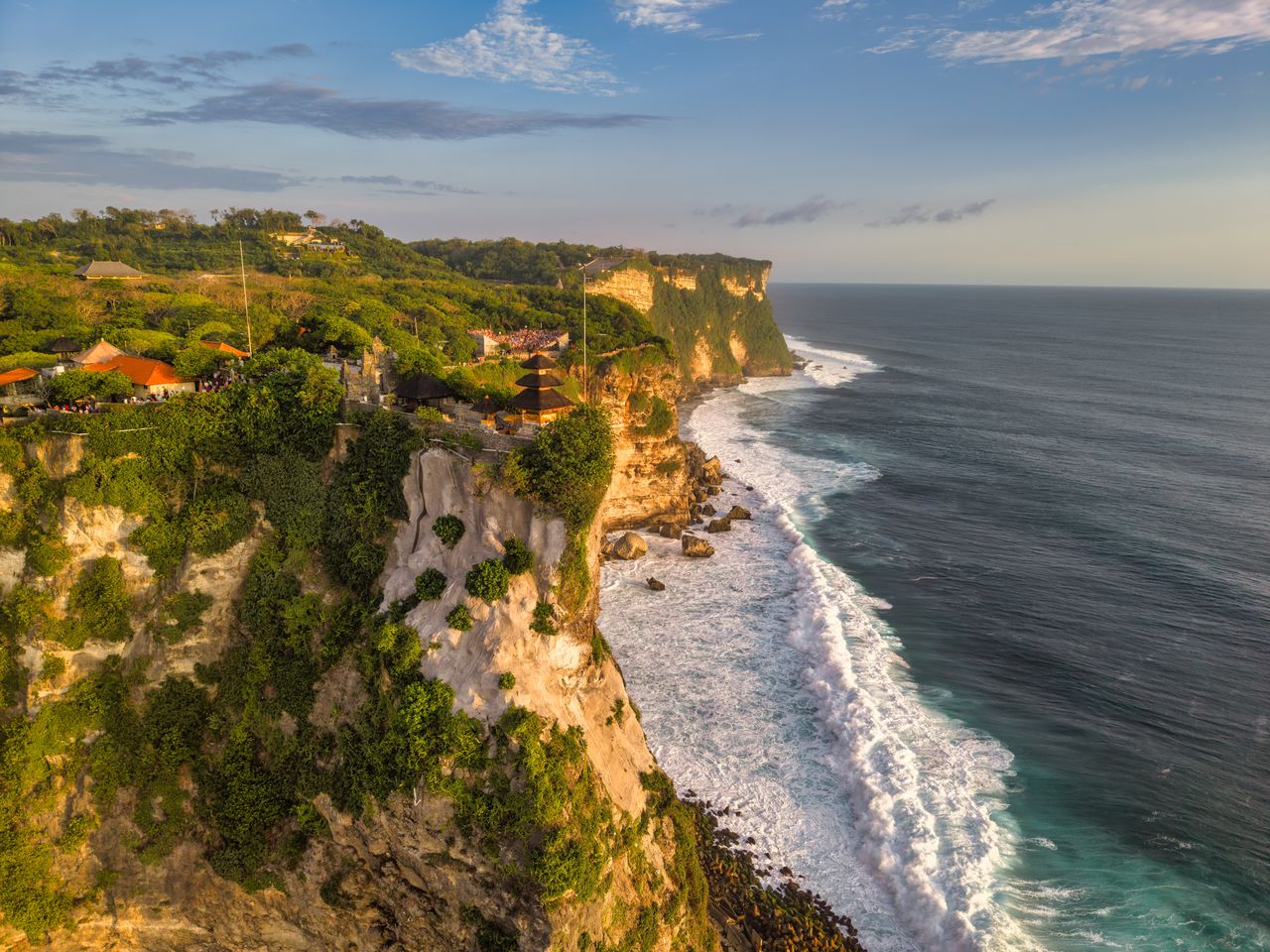
Uluwatu is home to some of Bali’s most spectacular coastline. Spread around the southern edges of the Bukit Peninsula, you’ll find everything from hidden coves beneath towering limestone cliffs to long stretches of sand, legendary surf breaks, and lively beaches lined with bars and places to eat.
But no two beaches in Uluwatu are quite the same. Some are perfect for swimming and lazy days on the sand, while others are famous for world-class waves or incredible sunsets. There are easily accessible beaches with plenty of facilities, alongside secluded spots that require a little more effort to reach.
Whether you’re looking to surf, swim, relax with a cold drink, or simply discover somewhere beautiful, there’s a beach here for almost every kind of day.
In this guide, we’ll take you through 14 of our favourite Uluwatu beaches, what makes each one special, and what you need to know before you visit.
TL;DR: Summary Of The Best Beaches In Uluwatu
- Our top picks: Bingin remains one of our favourites for its cliffs, surf and jaw-dropping sunsets. Melasti stands out for its facilities, dramatic setting and attractions beyond the sand, while Padang Padang combines a beautiful location with one of Bali’s most famous surf spots. Balangan is another favourite, particularly around sunset.
- For plenty of facilities: Melasti and Pandawa have parking close to the sand, places to eat and drink, and plenty happening around the beachfront. Dreamland is another good option if you want a wide stretch of sand without tackling one of Uluwatu’s infamous cliff staircases.
- For somewhere quieter: Green Bowl, Nunggalan, Nyang Nyang and Impossibles generally see fewer visitors than Uluwatu’s biggest names. Some take more effort to reach, but you’ll find less development, dramatic scenery and plenty more space once you get there.
14 Best Beaches In Uluwatu
Bingin Beach
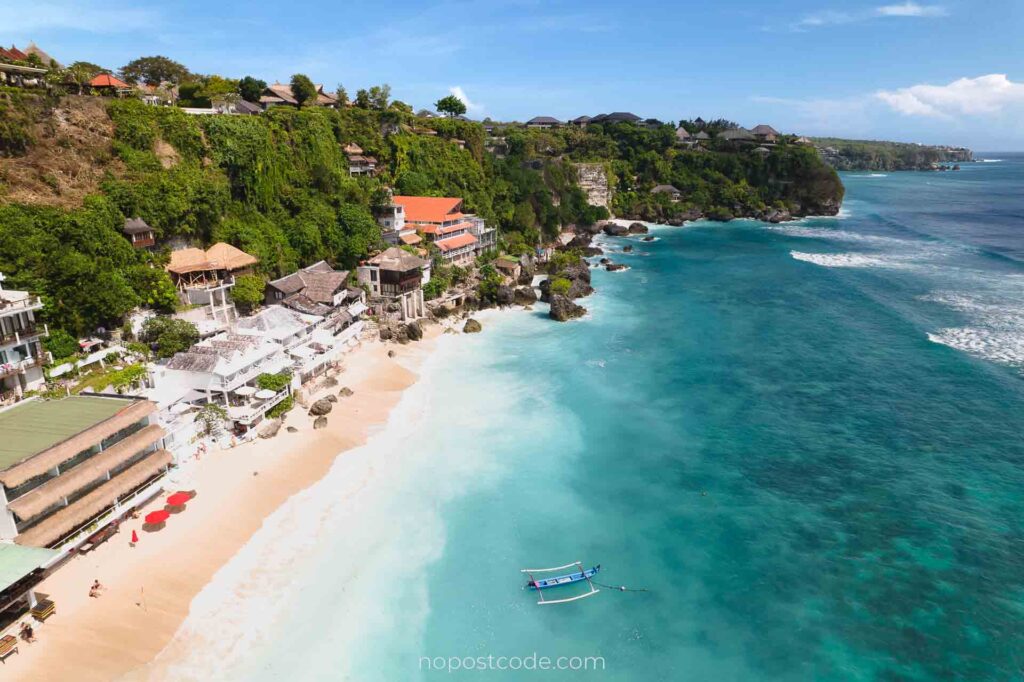
Bingin Beach has long been one of Uluwatu’s most beloved beaches. Hidden beneath towering limestone cliffs, this small stretch of sand became famous for its world-class surfing, laid-back atmosphere, and some of the best sunsets on the Bukit Peninsula.
For decades, surfers and travellers have made their way down the cliffs to spend lazy days beside the water, watch experienced surfers tackle the waves, and stay until the sky lights up at sunset. Despite Uluwatu changing enormously around it, Bingin has always managed to retain a character of its own.
However, Bingin Beach is currently undergoing one of the biggest transformations in its history. At the time of writing in mid-2026, parts of the area still resemble a construction site. Many old and dilapidated buildings have been removed, rubbish has been cleared, and major improvements are underway as the beachfront enters an entirely new chapter.


There are high hopes locally that the redevelopment will breathe new life into Bingin while allowing the natural beauty of the beach to shine once again. With improved facilities planned and a new premier boutique resort, Little Bingin, set to overlook the beach, the future is looking exciting.
Bingin remains a great beach and one that’s absolutely worth visiting. It may look a little different right now, but this Uluwatu classic has an exciting new chapter ahead.
Green Bowl Beach

Green Bowl Beach sits on the quieter south coast of the Bukit Peninsula and still feels far removed from the busier beaches around Uluwatu. Hidden beneath huge limestone cliffs, this small beach is known for its clear water, white sand, caves, and a much more secluded atmosphere.
The catch is getting there. You’ll need to tackle a long, steep staircase down the cliff, and what goes down obviously has to come back up. It’s worth bringing plenty of water and anything else you need for the day, as facilities are limited once you reach the bottom.
At low tide, you can explore the exposed reef and small rock pools, while the caves along the beach provide some welcome shade from the midday sun. Swimming conditions depend heavily on the tide and swell, so take care before heading into the water.
Green Bowl isn’t the easiest beach to visit, but that’s part of what has kept it relatively peaceful. If you don’t mind the stairs, you’ll be rewarded with a beautiful beach that still retains plenty of its untouched natural beauty.
Thomas Beach

Thomas Beach is one of those places that’s surprisingly easy to miss. Tucked beneath the cliffs between Padang Padang and Uluwatu, it was once one of the area’s quieter secrets, although word has definitely spread in recent years.
The beach itself is a stretch of soft sand backed by cliffs and greenery, with plenty of room to find your own spot even when a few people are around. There are a handful of simple warungs where you can grab food or a cold drink, along with sun loungers if you want to settle in for a few hours.
Getting down involves a fairly steep set of steps, but the walk is manageable and considerably easier than reaching some of Uluwatu’s more secluded beaches. Once you’re there, the atmosphere is relaxed, without the crowds and constant activity found at some of the better-known spots.
Visit Thomas Beach if you want somewhere that still feels relatively laid-back while remaining close to the heart of Uluwatu. It’s particularly good for a slow beach day when you don’t need much more than sand, sea, and somewhere to sit.
Dreamland Beach
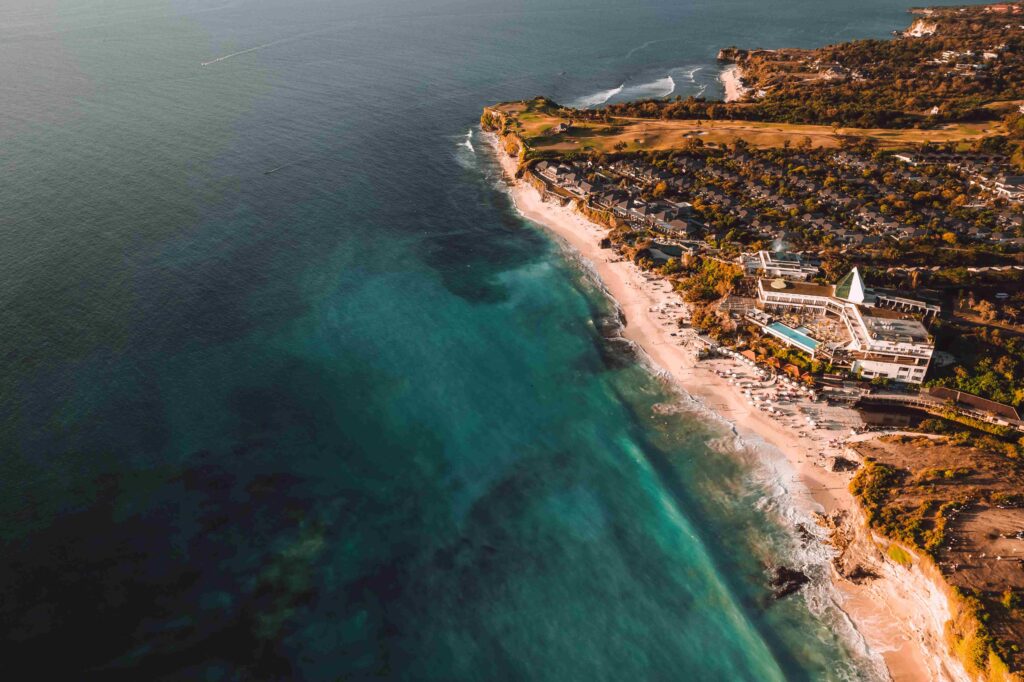
Dreamland Beach is one of the most popular beaches on the Bukit Peninsula, and it’s easy to see why. A wide stretch of golden sand sits beneath dramatic cliffs, with plenty of space to relax, watch the waves, or settle in for one of the area’s famous sunsets.
Compared with many beaches around Uluwatu, Dreamland is relatively easy to reach. There’s a large car park nearby, followed by a short walk down to the sand, so you won’t have to tackle hundreds of steps just to reach the water. You’ll also find sun loungers, beach seating, places to grab food and drinks, and other useful facilities close by.
The waves can be powerful, particularly when the swell picks up, so don’t assume the water is safe for swimming just because the beach itself looks inviting. Dreamland is also a well-known surf spot, attracting surfers when conditions are right.
It has become considerably more developed over the years, but the sheer size and setting of the beach still make it worth visiting. If you want an accessible beach with plenty going on and enough room to spend a full afternoon, Dreamland is an easy choice.
Balangan Beach
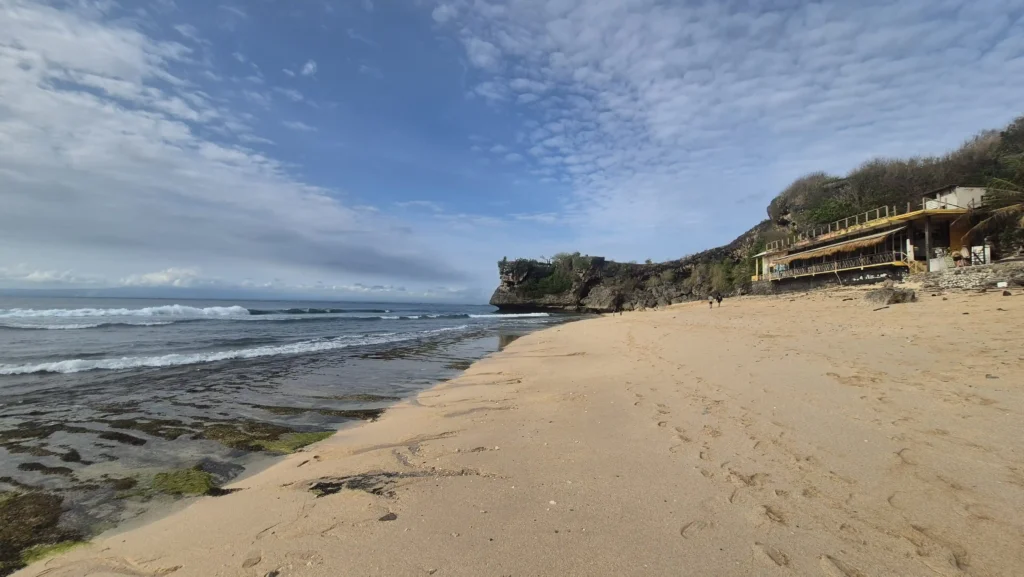
Balangan Beach has long been a favourite with surfers, but you don’t need a board to enjoy it. This long run of pale golden sand sits beneath limestone cliffs on the western side of the Bukit Peninsula and has a much more laid-back feel than some of Uluwatu’s busier beaches.
The reef break is the big attraction for surfers, with long left-hand waves that can become seriously powerful when the swell picks up. Swimming isn’t always ideal due to the reef and changing conditions, so check the tide and take care before heading into the water.
Access is relatively straightforward, with parking above the beach and steps leading down to the sand. You’ll find simple places to eat and drink around the area, while the clifftop viewpoint has become almost as famous as the beach itself.
It’s also a popular spot for e-bike rental, either as part of a tour or simply to enjoy the area at your own pace, not a bad idea when the midday heat makes walking a chore.
Balangan is particularly beautiful towards the end of the day. Its west-facing position makes it one of our favourite places around Uluwatu to watch the sunset, whether you’re sitting on the sand or taking in the view from the cliffs above.
Nunggalan Beach
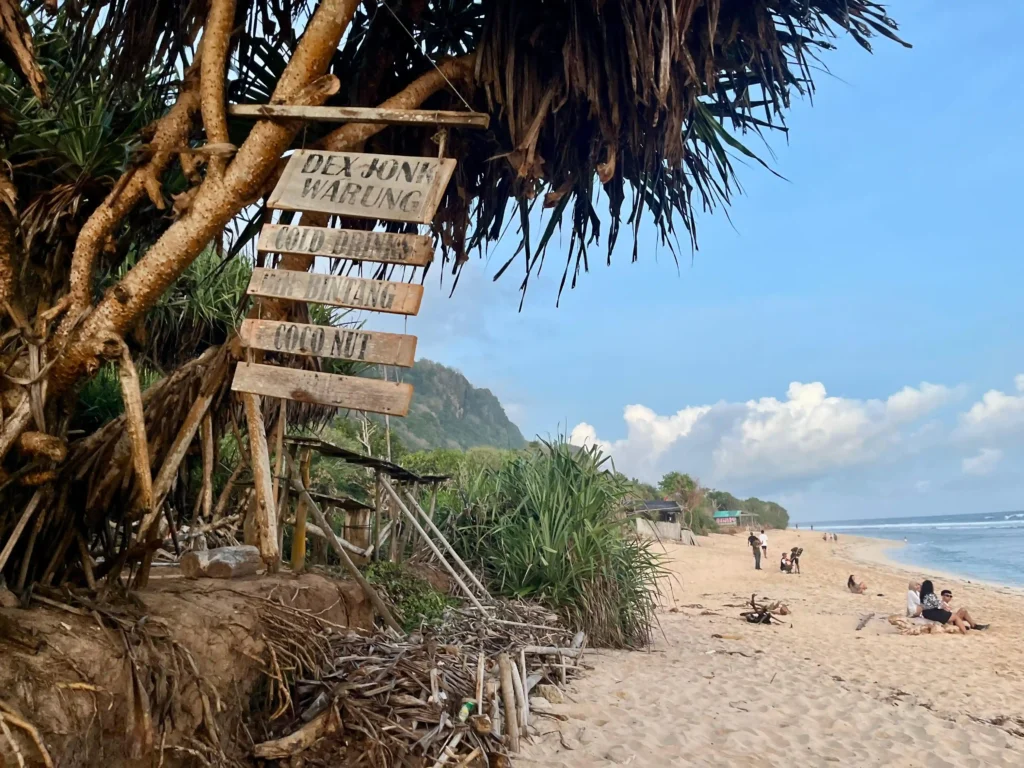
Nunggalan Beach is one of the more secluded beaches around Uluwatu, and getting there requires considerably more effort than simply parking up and walking onto the sand. Reaching the beach involves a fairly steep walk down from the clifftop, which also means a tiring climb back up afterwards, especially in the heat.
The reward is a long, relatively undeveloped stretch of coastline backed by towering cliffs and greenery. With fewer facilities and fewer visitors than Uluwatu’s better-known beaches, Nunggalan is a good choice if you’re looking to escape the busier parts of the peninsula and enjoy somewhere that still feels fairly wild.
The beach also became known for the remains of a shipwreck sitting on the sand, which over the years was covered in colourful graffiti and became a popular photo spot. However, don’t visit purely expecting the famous wreck, as very little of it remains today.
Bring water, wear decent footwear for the walk, and don’t expect rows of beach bars or sun loungers when you arrive. Nunggalan is worth visiting precisely because it offers something simpler: plenty of space, dramatic scenery, and one of the quieter beach experiences around Uluwatu.
Suluban Beach/ Blue Point Beach

Suluban Beach, often called Blue Point Beach, is one of the most distinctive beaches in Uluwatu. Hidden beneath towering cliffs, reaching the beach is part of the experience, with a descent of around 200 steps followed by a walk through narrow caves and gaps in the rock before you finally emerge beside the water.
The caves are one of the things that make Suluban so memorable, but the tide matters here. Low tide is generally the best time to explore, when more of the sand, rocks, and cave passages are exposed. At high tide, waves can surge right into the caves and restrict access through parts of the passage, so always pay attention to the conditions.
The naming can be slightly confusing. You’ll sometimes hear this area referred to as Suluban Beach, Blue Point, or even Uluwatu Beach. The names are often used loosely or interchangeably to describe this stretch of coastline and the beaches and surf access beneath the cliffs.
Above it all sits Uluwatu Temple, perched dramatically on the clifftop overlooking this part of the coast. Offshore, the area is legendary among surfers, with powerful reef breaks attracting experienced surfers from around the world.
Even if you’re not here to surf, Suluban is worth visiting for the setting alone. The journey through the cliffs and caves makes it unlike almost any other beach in Bali.
Melasti Beach
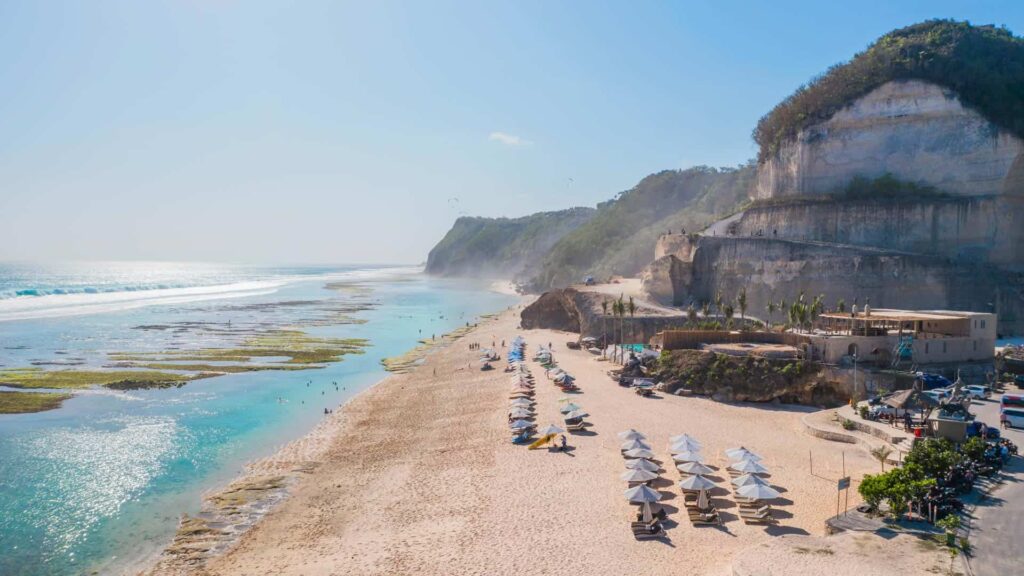
Melasti Beach is one of the most popular and easiest beaches to visit around Uluwatu. The dramatic road down through limestone cliffs is an attraction in itself, eventually bringing you almost directly to the beachfront, where there’s plenty of parking and none of the long staircases you’ll find at many other beaches in the area.
Once you’re down, there’s plenty going on. You’ll find food vendors, restaurants and bars, along with places to sit and spend a few hours by the water. Its easy access and facilities make Melasti particularly popular with Indonesian tourists, so don’t be surprised to find it especially busy during weekends and national holiday periods.
There’s more here than just the beach. Melasti has its own clifftop amphitheatre where you can watch a Kecak fire dance against a spectacular coastal backdrop, offering an alternative to the famous performance at Uluwatu Temple.
You’ll also find a man-made walkway extending out towards the sea known as the Southernmost Point of Bali. Whether or not you’re chasing geographical landmarks, it’s another great spot to take in the coastline.
If you want to visit Melasti Beach, allow a little time to explore rather than simply heading straight for the sand. Between the cliffs, beach, cultural performances and facilities, there’s easily enough here to fill an afternoon.
Padang Padang Beach

Padang Padang Beach is one of the best-known beaches in Uluwatu and one of those places that feels surprisingly tucked away considering how popular it has become. You reach the sand by walking down a staircase and squeezing through a narrow gap between the limestone rocks before the small beach suddenly opens up in front of you.
The beach gained even more international attention after appearing in Eat Pray Love, but surfers knew Padang Padang long before Hollywood arrived. The famous Padang Padang break is powerful and best left to advanced surfers, while the nearby, gentler break commonly known as Baby Padang is much better suited to beginners and surf lessons.
The beach itself is relatively small, so it can feel crowded during busy periods. You’ll find vendors selling drinks, snacks and beach essentials, while the sheltered setting makes it an easy place to spend a few hours when conditions are good.
Keep an eye on the monkeys around the entrance and pathways, particularly if you’re carrying food or loose belongings.
Padang Padang may no longer feel like a secret beach, but the unusual entrance, beautiful setting and legendary surf culture still make it one of Uluwatu’s essential stops.
Pandawa Beach
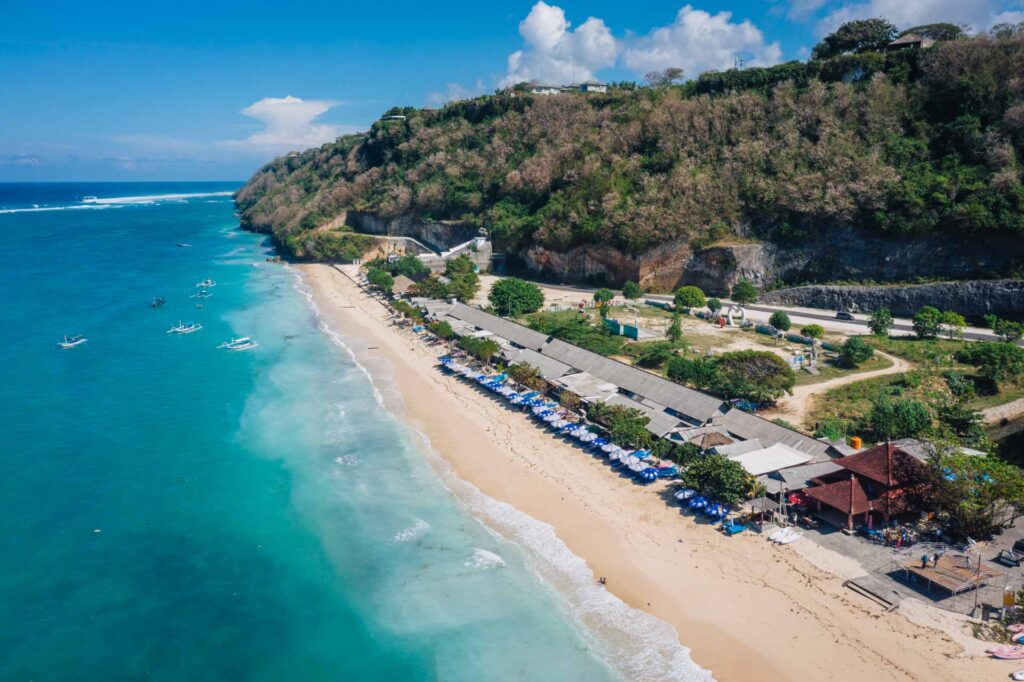
Pandawa Beach is another of the easier beaches to visit on the Bukit Peninsula, with a road cutting through huge cliffs before descending towards a long stretch of soft white sand. As you make your way down, look out for the large statues of the five Pandawa brothers from the Hindu epic Mahabharata, which give the beach its name.
The coastline here feels very different from the smaller coves around Bingin and Padang Padang. There’s plenty of space, easy parking, places to eat and drink, sun loungers, and a range of activities on and around the water.
Parts of the beach have shallow waters when conditions are suitable, making Pandawa popular with families as well as domestic tourists. However, as anywhere around the Bukit Peninsula, conditions can change with the tide and weather, so always check the water before swimming.
Pandawa is more developed than some of the quieter beaches on our list, but that’s also part of its appeal. If you want a chilled beach day without climbing hundreds of steps or carrying everything you need down a cliff, it’s a great option.
Nyang Nyang Beach

Nyang Nyang Beach is one of the longest and least developed stretches of sand around Uluwatu. Sitting beneath high cliffs on the southern coast of the Bukit Peninsula, it feels noticeably more open and wild than many of the smaller beaches closer to Bingin and Padang Padang.
For years, reaching the beach involved a fairly demanding walk down the cliff, which helped keep visitor numbers low. Access has improved considerably, although the steep landscape still makes getting down here feel like more of an adventure than visiting somewhere like Melasti or Pandawa.
Once you arrive, there’s plenty of space to spread out along the long sandy beach. Development remains limited compared with Uluwatu’s more popular beaches, so it’s a good choice if you want to get away from crowds and spend a few hours somewhere quieter.
The exposed coastline can produce strong waves and currents, so take care if you’re planning to swim. Nyang Nyang is really at its best for walking, relaxing and enjoying the scenery rather than expecting a beach packed with facilities and activities.
If you have time to explore beyond Uluwatu’s usual favourites, Nyang Nyang is well worth the trip.
Gunung Payung Beach
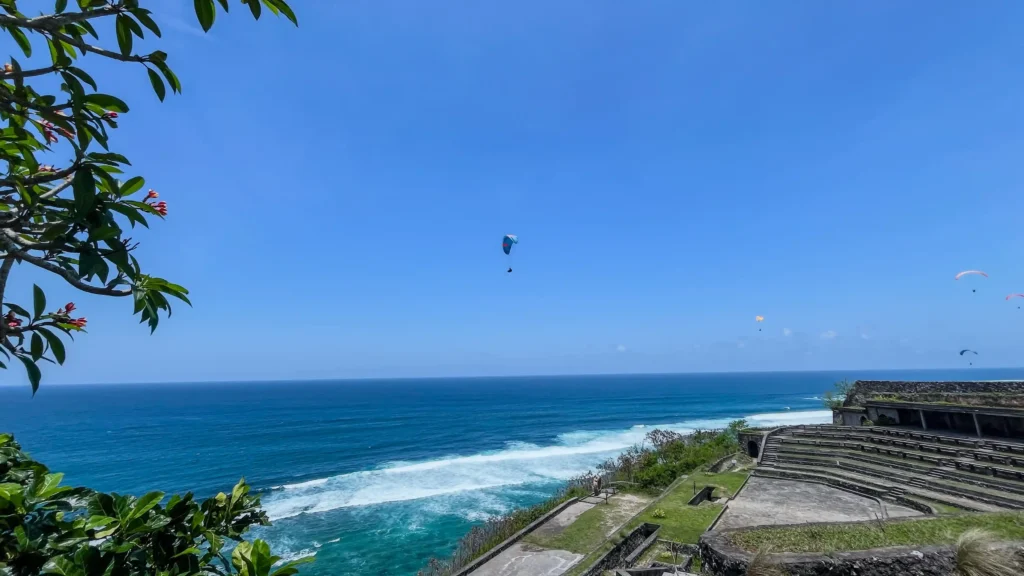
Gunung Payung Beach sits in the Ungasan area, just east of what most visitors consider the main Uluwatu area. Not far from Pandawa Beach, it’s a much less developed spot than its better-known neighbour, with soft white sand, clear water, and high limestone cliffs creating a fairly secluded setting.
Getting there takes a little effort. After paying a small entrance fee and parking above the beach, you’ll need to make your way down roughly 300 steps before passing through a small cave-like opening to reach the sand.
The beach changes noticeably with the tide. At low tide, there’s more room to explore, with exposed reef and rock pools appearing along parts of the shoreline. Facilities are fairly limited compared with places like Melasti or Pandawa, which is worth keeping in mind if you’re planning to stay for a while.
Gunung Payung is a good option if you want to explore beyond the most famous Uluwatu beaches. It takes a little more effort to reach, but that also means you’ll often find fewer people once you get down there.
Impossibles Beach

Impossibles Beach sits between Bingin and Padang Padang and takes its name from the famous surf break just offshore. It’s a long, narrow stretch of sand beneath the cliffs and feels considerably less developed than many of its better-known neighbours.
Access is part of the reason it remains relatively quiet. There isn’t a simple main entrance leading directly onto the beach, and reaching the sand involves making your way down from the clifftop through one of the local access routes. Once there, you’ll find far fewer facilities than at places like Dreamland or Melasti, so it’s worth bringing what you need with you.
The surf break is the main attraction, producing long, fast waves over the reef when conditions line up. It’s a spot for advanced surfers rather than beginners, and the reef and changing tides also mean you should take care if you’re planning to swim.
For everyone else, Impossibles offers a quieter alternative to nearby Bingin and Padang Padang. Come for the scenery, watch the surfers, and enjoy a stretch of Uluwatu coastline that still feels relatively tucked away.
Karma Beach
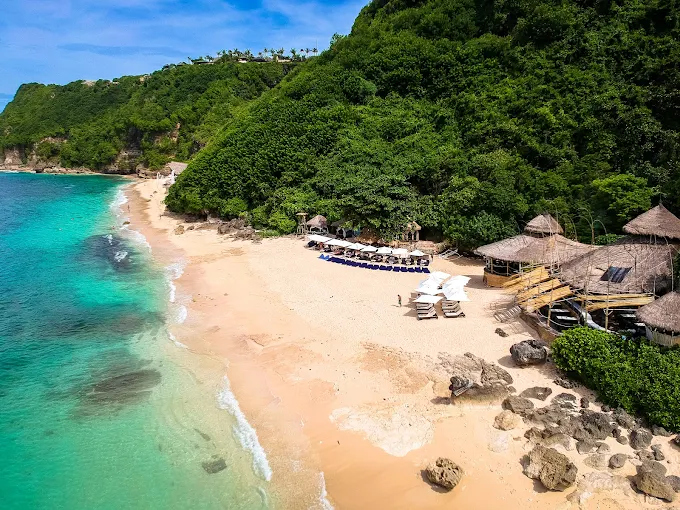
Karma Beach sits beneath the cliffs on the southern side of the peninsula. It’s a relatively small stretch of white sand, with clear water and high limestone cliffs surrounding the coastline.
Access is more restricted than at many of the beaches on this list, and the area has a more developed, managed feel. There are facilities available once you’re down by the beach, making it possible to spend a few hours here without needing to bring everything with you.
It’s worth knowing that Karma Beach isn’t necessarily the peaceful, secluded spot the location might suggest. Music can be fairly loud at times, and the atmosphere won’t suit everyone, particularly if you’re looking for somewhere quiet and natural.
It’s still an interesting beach to check out if you’re exploring this side of the peninsula, but with so many other beaches around Uluwatu to choose from, it wouldn’t be at the top of our list.
Bonus Beaches Nearby
If you have a little more time to explore, there are several excellent beaches beyond Uluwatu that are worth adding to your trip. These three offer something slightly different and are easy to combine with other destinations around southern Bali.
Jimbaran Beach
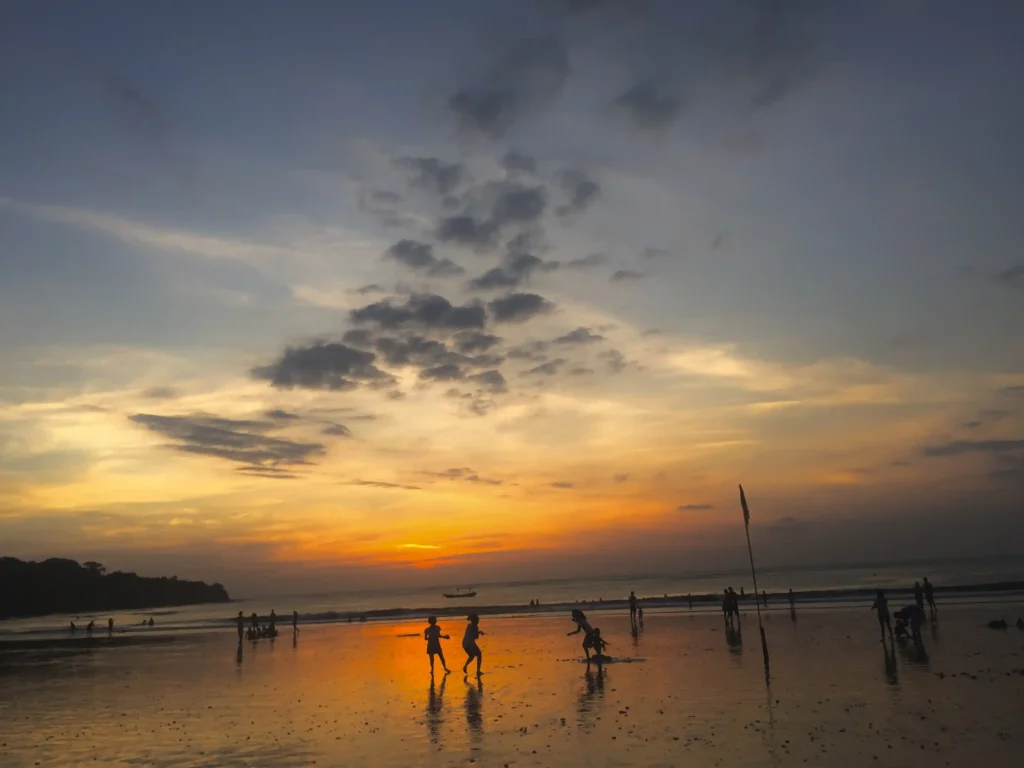
Not far from Uluwatu, Jimbaran Beach is a long, west-facing stretch of sand known for its beautiful sunsets, beachfront seafood restaurants, luxury hotels, and famous fish market.
It has a very different atmosphere from Uluwatu’s cliff-backed beaches, with easier access and plenty happening along the coastline. Come during the afternoon, explore the fish market, then stay for a seafood dinner with your feet in the sand as the sun goes down.
Nusa Dua Beach
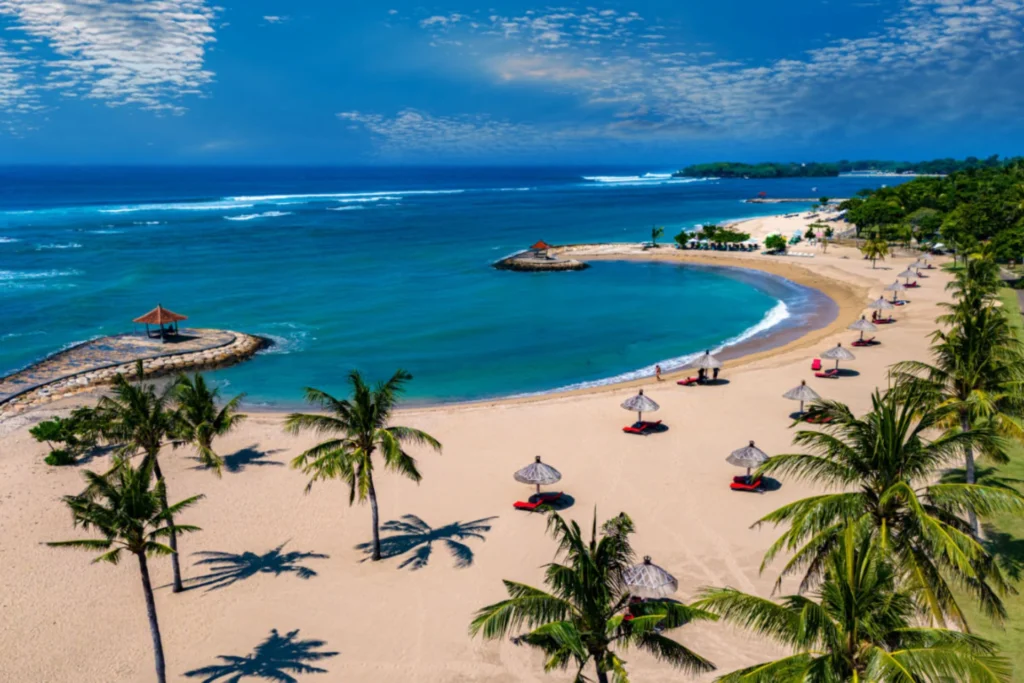
Over on the east coast of the peninsula, Nusa Dua Beach is a great option for families or anyone looking for calmer beach days.
The area is home to some of Bali’s best-known resorts, with soft sand, generally gentler waters, plenty of facilities, and easy access to watersports. It feels much more polished and organised than many of Uluwatu’s beaches, making it a good contrast if you’re exploring different sides of the peninsula.
Berawa Beach
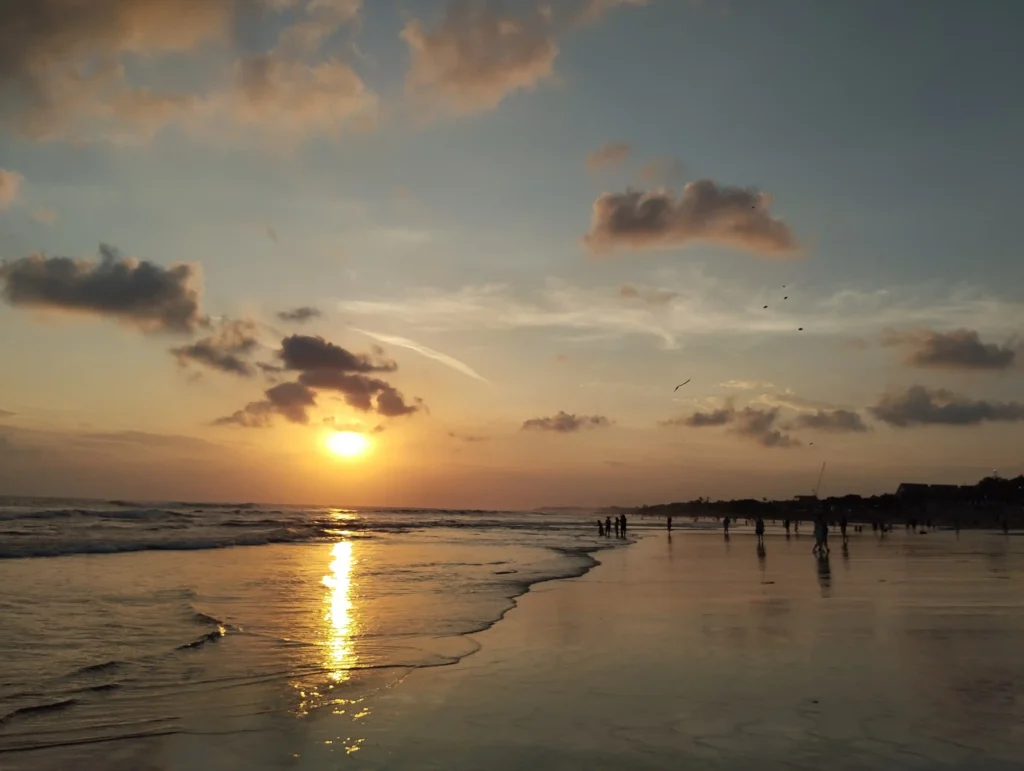
This one is a bit of a wild card. If you’re heading back north beyond the airport towards Canggu, Berawa Beach is one of our favourite places to stop.
It’s a huge stretch of dark volcanic sand with plenty of space, great waves, an energetic atmosphere, and some incredible sunsets. Berawa is also home to FINNS Beach Club, the world’s best beach club, where you can spend the day swimming, eating, drinking, and enjoying live entertainment before watching one of Bali’s famous sunsets right beside the beach.
If your trip takes you from Uluwatu towards Canggu, Berawa makes a pretty spectacular change of scenery.
FAQs
Which Uluwatu Beach Is Best For Swimming?
Melasti Beach is one of the best choices for swimming, thanks to its long stretch of sand and generally calmer conditions, particularly around low tide. Pandawa Beach is another good option, with easy access and plenty of facilities nearby.
Conditions can change quickly around Uluwatu, though, and many beaches have strong currents, reef, and powerful waves. Always check the conditions before entering the water and pay attention to local warnings.
Which Is The Best Beach In Uluwatu For Beginners To Surf?
Padang Padang is one of the best-known areas for beginner surfers, with the gentler Baby Padang break offering a more manageable introduction to surfing than many of Uluwatu’s famous reef breaks.
You’ll find surf schools and instructors throughout the area, with lessons available for complete beginners. More challenging breaks at Uluwatu, Bingin, and other parts of the peninsula are better suited to experienced surfers.
Which Uluwatu Beach Is Best For Sunset?
Bingin Beach is hard to beat for sunset, with its west-facing location, dramatic cliffs, and beachfront restaurants making it an incredible place to end the day.
Balangan and Dreamland are also fantastic sunset spots, with wide stretches of sand and uninterrupted views towards the horizon. Whichever you choose, arrive early, grab a cold drink, and stay until the sun disappears.
Are Uluwatu Beaches Easy To Access?
It depends on the beach. Melasti and Pandawa are among the simplest beaches to reach, with roads leading down the cliffs and parking areas close to the sand.
Others require a little more effort. Green Bowl involves a steep staircase, while reaching beaches such as Nunggalan requires a longer walk down towards the coast. The extra effort is often rewarded with fewer crowds and a more secluded setting, but it’s worth checking access before you set off.
Is There A Secret Beach In Uluwatu?
Not really, at least not anymore. Uluwatu was once full of beaches that felt genuinely secret, known mainly to local residents and adventurous surfers, but the area has changed dramatically over the years.
There are still quieter and lesser-known beaches where you can escape the biggest crowds, particularly those that require a steep walk or a little more effort to reach. However, with maps, social media, and Uluwatu’s growing popularity, there aren’t many beaches that could truly be described as secret today.
That doesn’t mean you can’t find a secluded stretch of sand, though. Visit early, explore beyond the most famous spots, and you may still find somewhere that feels like your own little hidden beach for a few hours.
Why Does Uluwatu Have So Many Beautiful Beaches?
Much of Uluwatu’s beauty comes from the unique geography of the Bukit Peninsula. Unlike the volcanic landscapes found across much of Bali, this part of the island is dominated by limestone, creating towering cliffs that have been gradually shaped by the sea into dramatic coves, caves, and sheltered bays.
Below the cliffs, pale limestone and coral contribute to the white and golden sand that makes the coastline look so striking against the clear blue water. Add Bali’s tropical climate, powerful waves, coral reefs, and west-facing sunsets, and you have the perfect ingredients for some truly spectacular beaches.
Each stretch of coastline has been shaped slightly differently, which is why Uluwatu can offer everything from tiny beaches hidden between cliffs to long, sweeping stretches of sand.
Do Uluwatu Beaches Charge An Entrance Fee?
Most beaches around Uluwatu are free to visit, although you may be asked to pay a small parking fee for your car or motorbike. Just a handful of beaches charge an entrance fee. This small fee goes towards maintaining access, facilities, and keeping the area clean.
Fees can change, so it’s always worth carrying some small cash with you when exploring Uluwatu’s beaches. Even if there’s no entrance fee, having a few smaller notes handy for parking can save you some hassle.
Are There Beach Clubs In Uluwatu?
Yes. Uluwatu and the wider Bukit Peninsula are home to several beach clubs, ranging from relaxed venues beside the sand to luxurious cliffside destinations with pools, restaurants, music, and spectacular views.
The beach club scene here tends to feel more spread out and laid-back than in other parts of Bali. For the full-scale Bali beach club experience, however, it’s worth making the trip north to Berawa Beach in Canggu, home to FINNS Beach Club. Known as the world’s best beach club, FINNS takes things to another level with multiple pools, restaurants and bars, live entertainment, DJs, and all-day parties right beside the beach.
What Is The Best Beach In Uluwatu?
Like always, the best beach in Uluwatu is subjective and depends on what you’re looking for. Some people want somewhere easy to reach with calm water and plenty of facilities, while others would rather find a quieter stretch of sand or spend the day watching some of Bali’s best surfing.
Call us biased, but Bingin Beach is our favourite. We’ve spent a lot of time around this part of Uluwatu, and there’s something about the combination of cliffs, surf, sunsets, and the character of the area that keeps us coming back.
That doesn’t necessarily mean Bingin will be your favourite beach though. Melasti is much easier to access, Padang Padang is one of the most iconic, and Balangan is hard to beat at sunset. You don’t need to visit all the beaches in Uluwatu to find your own favourite. Explore a few of the best Uluwatu beaches on this list and see which one you end up wanting to return to.
How Many Days Do You Need To Explore Uluwatu’s Beaches?
You could visit several Uluwatu beaches in a single day, but we wouldn’t recommend trying to rush around and tick them all off a list. The beaches are spread across the area, and some require long walks or steep stairs to reach.
Two or three days gives you much more time to explore different parts of the coastline without spending half your trip travelling between them. You could combine Bingin, Padang Padang and Suluban on one day, then visit beaches further south such as Melasti, Green Bowl or Pandawa on another.
If you have longer, even better. Pick a few beaches you really want to see, leave some space for sunsets and spontaneous stops, and remember that sometimes the best beach days are the ones where you don’t do very much at all.
Final Thoughts On Best Beaches In Uluwatu, Bali
From famous surf and lively stretches of sand to secluded coves hidden beneath the cliffs, Uluwatu is home to some of the most beautiful and varied beaches in Bali.
Part of the fun is discovering just how different they can be. You might spend one day learning to surf at Padang Padang, another relaxing on the sand at Melasti, then finish your trip watching an amazing sunset from Bingin or Balangan.
You don’t need to visit every beach on this list to experience the best of Uluwatu. Choose a few that suit the kind of day you’re looking for, leave some time to explore, and don’t be surprised if you discover a favourite of your own along the way.
Whether you’re here for the waves, the scenery, or simply a few lazy days by the sea, Uluwatu’s coastline is one of the highlights of any trip to southern Bali.